
Understanding Costs
Undertaking a project has a variety of costs associated with that project which are budgeted for pre-construction and construction. Pre-construction costs are for everything that gets a project ready for construction and includes the design, engineering, drawings, assessments, surveys, contracts and permits. Construction costs are just that, the costs associated with construction. While new home construction costs can vary from $500,000.00 and up, more people are exploring renovations and additions to make their home reflect their evolving lifestyle. Below is a breakout of costs associated with completing a home addition.
Understanding Home Addition Costs
Home additions, like renovations, can improve the functionality of your home but also increase the total living space without having to move. If you are considering expanding your home, expect to see an estimated construction budget ranging (broadly) from $100,000.00 to $400,000.00, with an average project budget around $250,000. Factors such as design complexity, type of addition, and location all contribute to the overall budget.
Key Takeaways
- Home additions vary broadly depending on not only the type of addition, what types of spaces will be placed inside them.
- Adding an additional story starts around $100,000.00 while a main floor extension (without a developed basement) starts around $150,000.00.
- Multi-level additions that include a developed basement, start around $250,000.00.
- Numerous factors influence the construction budget, including location, design, complexity, material and finish selections and labor costs. Design and engineering fees, permits, and zoning bylaws also contribute to the final budget.
Here is a closer look at each type of addition and typical associated costs to the complete the project.
Additional Story
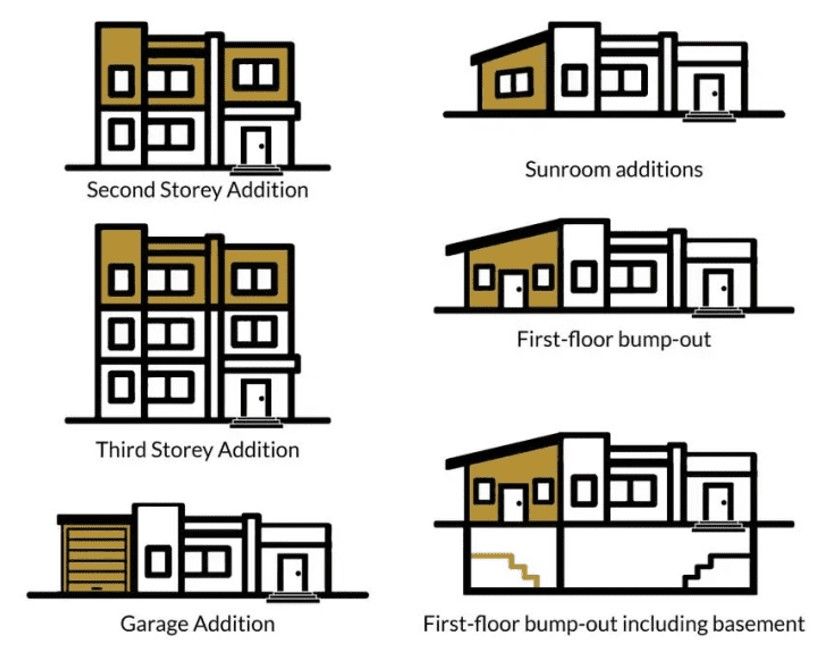
If your house is lacking square footage, but your property doesn’t have the room to expand out an additional storey could be a cost-effective solution. This type of home addition involves building an additional floor on top of the existing structure, taking advantage of its already established foundation and footprint.
Second or third storey additions are great for creating a new primary or secondary bedroom, an office, family space or an in-law suite.
The overall budget for a full floor addition starts at $75,000.00 whereas extending the upper floor (over the garage or nook) starts at $20,000.00.
Main Floor Additions
One of the main benefits of adding a ground floor extension, is the ability to expand space without major foundation work. This type of addition typically utilizes screw piles and heat runs for foundational support, eliminating the need for excavation.
A main floor addition is great for creating a new family room, kitchen, an office or in-law suite.
The overall budget of a main floor addition starts at $50,000.00 depending on what the addition is for. For example, a small addition for a simple sunroom or breakfast nook would carry a budget of $50,000.00, whereas a larger addition for a kitchen or in-law suite that needs plumbing, HVAC and other systems tied into the existing would carry a budget of over $200,000.00. If the foundation is being extended with the addition, plan on adding 20% to budget.
Multi-Level Additions
A multi-level addition is the most complex type of addition and as the name implies, involves adding multiple stories to a home, usually a fully developed basement, main floor and upper floors. Individuals considering this type of project can expect a starting budget of $250,000.00.
While multi-level additions tend to be the most expensive, they also tend to create the most space. For example, a multi-level addition could involve adding a 15x15 space to the main floor designed as the new kitchen, a new media room in the basement and an additional bedroom on the upper floor.
The overall expense of constructing any of these project types is determined by location, size, material and finish selections, labor costs, and complexity. All project types need to account for pre-construction costs such as design fees, engineering services, permit fees, as well as demolition costs to prepare the site and possible temporary housing.
Budget Estimates by Room Type
The construction budgets for the different types of home additions are also influenced by what spaces are being considered. For instance, the cost of adding a 15x15 space used as living room would be less expensive than a kitchen and a simple four-piece bathroom would be less expensive than a master ensuite.
Bedroom Addition
One of the most sought-after additions to a home are extra bedrooms. This addition is driven by evolving lifestyle and family needs. An additional bedroom could be for an additional family member, a guest or used as an office or hobby room. On average, the starting cost to add a bedroom is $15,000.00. When considering a primary bedroom, the start cost is $60,000.00 which includes the bathroom and walk-in closet.
Bathroom Addition
Expanding your home for a new bathroom pr laundry room can add value and functionality. Bathrooms have additional costs compared to bedrooms due to the plumbing required for these spaces. Carefully planned fixture placement can reduce costs. Dedicated laundry room are becoming a popular addition or renovation too. These rooms are often blended or connected to other spaces within the home such as mudrooms, ensuites or closets. Starting costs for a new bathroom is $20,000.00 whereas a laundry room would start at $10,000.00. Bathrooms and laundry room budgets, like kitchen budgets, can ballon rapidly with a long list of convenience and luxury selections. Having a clear budget and list of priorities is critical for this type of project.
The price range for adding a new bathroom onto an existing home usually falls between $20,000-$60,000 but may vary depending on various factors such as size, extent of plumbing and electrical work required, choice of materials used, and any additional features desired (e.g., steam shower). The level of luxury you desire also plays into these estimated costs which could potentially increase expenses even more. When considering incorporating extra elements like walk-in closets alongside bathrooms, the overall expense will go up due to now requiring both storage and additional plumbing installations. This makes having a clear budget and a list of priorities important when planning out your bathroom addition.
Multi-Purpose Addition
Expanding a home to have a second or third multi-purpose space can be an excellent way to provide more defined spaces for relaxation and entertainment. Multi-spaces are typically used as a living or family room when located on the main or upper floors, or as a media or recreation room when in the basement can be an excellent way to add more space for relaxation and entertainment. A multiple-purpose space has a starting budget of $80 to $200, and are completely dependent factors such as size, and finishes. For example, adding a 15’0”x15’0” living room could have a starting budget of $75,000.
Garage Addition
Adding an attached garage can keep your cars protected, while providing extra storage, or create a dedicated work area. Expect starting budget $40,000.00 for a single car garage and over $200,000 for a triple car garage. Building an attached garage will have a lower cost to a detached one. Garages are quickly shifting into highly detailed spaces to sever a multitude of uses and like the other spaces listed here, having a clear list of priorities will keep your budget on track.
Location
The cost of a home addition can vary depending on where you live. Different provinces and municipalities have their own unique requirements that contribute to the overall budget. Labour costs are an important factor too. Labor costs for a project located in a rural community or that is more than an hour drive outside of a major City or Town, could be higher. Alternatively, if you live in a city like Vancouver or Toronto, your labor costs could be higher too.
Will the Home Addition Tie-in or Stand Alone?
A home addition extends upon your existing space – this can either be seamless or stand alone. A seamless addition could carry additional costs to blend flooring, exterior finishes and roof lines. A stand-alone addition typically doesn’t have these additional costs as its not being tied into the existing but may see some increased costs to ensure exterior materials and interior finishes match the existing to be cohesive.
Materials and Finishes
The type of materials and finishes you choose will greatly affect the overall budget. Selecting vinyl siding, laminate flooring, ceramic tile, or engineered quartz countertops can help keep budgets aligned. Working closely with designers and contractors is essential in finding budget-friendly yet visually appealing finishes.
Labor and Professional Services
The cost of labor is a major consideration when planning for a home addition, as it can make up around 50-60% of the total project budget. Hiring experienced and trained contractors is crucial for ensuring safety and compliance with building codes, especially when dealing with specialized skills or potentially hazardous materials. Factors such as location, project complexity, and contractor experience will impact the specific costs associated with the project. It’s important to carefully consider these factors to accurately plan for the overall financial investment needed.
Permits and Zoning Laws
To successfully complete a project, it’s important to consider local bylaws. The bylaws determine what can be built and where. Permits ensure the project is build to minimum building and safety standards and offer a degree of assurance that the contractors and trades completing the work are competent. Obtaining the necessary permits can range from $200 to over $10,000. Additional expenses may also be incurred for specialized tests or trade permits. Inspections will take place throughout the duration of the project, to ensure compliance and can affect both timeline and budget.